For business
Data Foundations
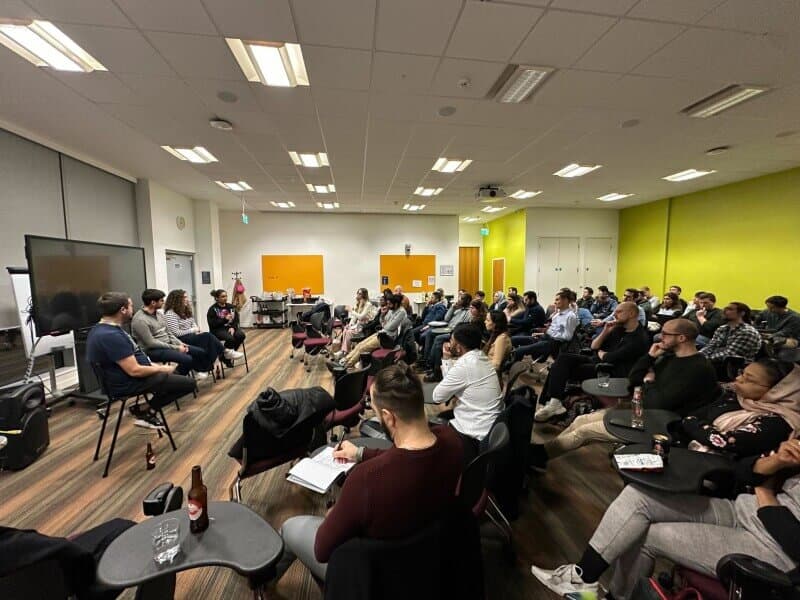
4.8 / 5 from 78 Google reviews
1,000+ learners trained
Trusted by teams at











Who it is for
People who know their area well and are new to data
Domain experts Their value is deep, hands-on experience in their own part of the business. Data Foundations gives them the confidence to use data in daily decisions.
Colleagues who mainly receive reports They see data as a report card on what has already happened. They leave asking it questions instead.
Non-technical teams No analyst background needed. If someone says “I want to understand the reports I see and ask better questions”, this is for them.
The format
Half a day a week, for six weeks
Six weekly sessions
Half a day a week for six weeks, fitted around the working week.
In person, online or hybrid
At your offices, online or hybrid, whichever suits your team.
A realistic case first
Each method is taught on a realistic business case from Prism, our simulated e-commerce company built on 500M+ rows of real data, where people can practise without risk to live figures. The final week applies it to a real challenge from your business.
Skills, not one tool
People learn the why, the what and the so-what of working with data, which carries over to whichever reports and dashboards your team uses.
The six weeks
One part of working with data each week: the question, the plan, the evidence, the story, the audience, then a real challenge.
- Foundations
Turn a vague ask into a clear question
Break a vague business request into specific, measurable questions, and find the question behind the question. Tell a metric from a KPI. Methods: the Business Problem Lens and driver trees. Each person also sets their own goal for the six weeks.
- Foundations
Plan the investigation
When reports conflict, decide what to look at first. Map what each stakeholder wants from the answer, turn opinions into hypotheses you can test, and build a prioritised plan. Learn the types, sources and structure of the data you will use, and the rules on privacy, security and responsible use of AI that apply to it. Methods: hypothesis trees and a prioritisation matrix.
- Foundations
Question the evidence
Challenge a finding with confidence. Question the assumptions behind an analysis, spot misleading charts and cherry-picked figures, and see how filters, time periods, sample size and data quality change a conclusion. Read an A/B test and its common flaws, and make a defensible decision when the data is incomplete. Methods: root cause analysis, survivorship bias and bias red flags.
- Build
Find the story
Move from a data dump to one clear insight. Structure a recommendation so it is easy to follow and remember, and build the charts, dashboards and reports that carry it. Methods: the narrative arc and the Pyramid Principle.
- Build
Win over a sceptical audience
Adapt the same story for different audiences, and prepare for the pushback before it comes. Use a recommendation to lead a group discussion, build agreement and secure a commitment.
- Capstone
Apply it to a real challenge
In mixed groups, people apply the methods to a real challenge from your business and present their findings to their peers. They review what worked, note where AI and automation could help in their own role, and each write a personal action plan. Then everyone retakes the skills assessment and the confidence survey.
Afterwards
What people can do afterwards
Frame useful questions
Move from “show me the numbers” to “what do I need to know to make this decision?”
Read KPIs in context
Judge a KPI against the business drivers behind it, and know when a sample is too small to trust.
Tell good insight from misleading
See how filters, time periods and data quality change a conclusion.
Think critically
Separate confirmation bias from genuine insight, and challenge the assumptions behind a finding.
Tell the story
Share insights in meetings, take people through live reports, and make a recommendation from a dataset.
How we measure it
Measured before and after
Before week 1
Each person takes a skills assessment and a confidence survey, rating their confidence with data on a scale of 1 to 5.
During the six weeks
Coaches observe how each person works through the case in every session, and give feedback as they go.
Week 6
After the final challenge, people repeat the same skills assessment and confidence survey.
Afterwards
You get an impact report showing skills and confidence before and after.
Who teaches it
Coaches who have worked with data
Coaches are confirmed for each cohort. Two of the coaches who teach this material:

Tash Joslin
Data Coach
Over 20 years in data strategy. Helps people turn numbers into clear stories that land with stakeholders.

Martin Stanley
Data Analytics Coach
Data analytics leadership across consulting, retail and telco. Teaches data analysis and visualisation, from raw data to insights that move decisions.
Going further
Where Data Foundations leads
Depth for a few people
For people who want to go deeper, our government-funded Level 4 Advanced Data & AI programme runs alongside the job. It is endorsed by The AI Board, an Ofqual-regulated awarding organisation.
Funded programmes for employers →Part of a wider programme
Data Foundations can run on its own, or as one layer of a whole-organisation programme alongside AI Foundations and AI Champions.
Whole-organisation programmes →Questions
Data Foundations FAQs
Do people need a technical background?
+
No. Data Foundations is built for non-technical teams: people who know their own area well and mostly receive reports rather than build them.
Is it in person or online?
+
The weekly sessions run in person at your offices, online, or as a hybrid, whichever suits your team.
Do people work on our own data?
+
Not at first. Each method is practised on a business case in Prism, so mistakes cost nothing. In week 6, people apply what they have learned to a real challenge from your business.
Which tools does it teach?
+
It is not training in one tool. People learn how to frame a question, check the evidence and present a recommendation, and that carries over to the spreadsheets, dashboards and reports your team already uses.
Talk to us about your team
Tell us about your team and what you want people to be able to do. We will come back with a proposal within one working day.